

Are Americans—and young men especially—engaging in more vice than ever before? What qualifies as a vice? And is it any of the government’s business?
These were some of the questions posed at a recent conference hosted by the Center for Expanding Viewpoints in Higher Education at Tufts University. I participated in the opening panel, along with Charles Fain Lehman of the Manhattan Institute and Shaleen Title, a lawyer and activist who formerly served as a commissioner on Massachusetts’s Cannabis Control Commission, with Ian Cross of WGBH moderating. Our full conversation can be watched here. What follows is a summary of the discussion and my major takeaways.
Why Vice, Why Now?
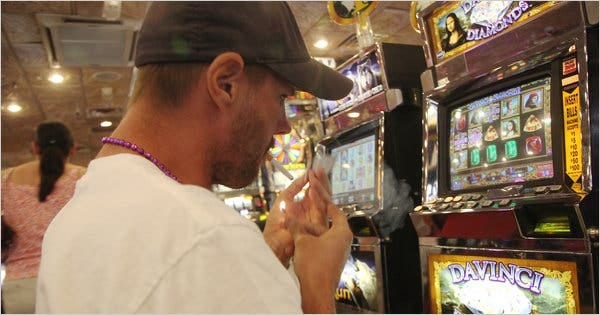
Roughly half of American men have a sports betting account, and more than a quarter have placed a bet in the last six months. More than 60 million Americans smoke marijuana, and nearly 20 million use it daily or near daily. OnlyFans creators collectively earn more than NBA players, and the average American boy today first encounters pornography around age 12.1 While these activities have existed for millennia, they’ve quickly moved out of the shadows and into the mainstream.
Two forces drove this shift. The first is political. In the last ten years recreational marijuana has gone from legal in 4 states to legal in 24, sports betting from 1 to 40. Legalization decreased friction and marketing drove normalization; millions of Americans who would have never used an underground bookie or local pot dealer now place bets with DraftKings and shop at dispensaries.
The second is technological. Smartphones have supercharged vices, making them immediately accessible and increasingly potent. Americans can now gamble on every pitch from the shower, have marijuana several times stronger than anything available in the past quickly delivered to their door, and with a few clicks access sexually explicit content that would make Hugh Hefner blush.
The common thread is not that Americans necessarily want more vice. It’s that vice has become frictionless and technologically optimized, available at every moment of weakness—and the companies delivering it have perfected how to keep people coming back.
What Makes a Vice a Vice?
One of the main points of disagreement was over definition. For Charles, certain activities are inherently vices—bad habits that induce “a weakness of the will” and make us worse off by their nature. (He recently wrote an essay for National Affairs titled “The Case for Prohibiting Vice.”) Shaleen rejected that framing entirely, arguing that the through line for these activities is persistent human demand. If people have always sought them out, and always will, the relevant question isn’t whether they’re good or bad, but how we manage that reality.
I ended up in a somewhat different place. I don’t think Charles is entirely wrong—most of us do things that leave us worse off, and that’s worth taking seriously. But the category is too broad to be useful. Too many things can fit: gambling or drugs, obviously, but also social media, junk food, or mindless television. What makes something a vice, in my view, is less the activity itself than the pattern of engagement: whether it’s driven by escapism, and whether it crowds out more meaningful parts of life.
Today’s Vices are Lonely
One of the most useful distinctions to come out of the panel was between social and solitary vice. While certain vices have increased, others—mainly alcohol and cigarette smoking—have decreased dramatically.2 This is mostly a good thing: alcohol alone accounts for far more deaths, hospitalizations, and violence than gambling, marijuana, and pornography combined. But it can also act as a social lubricant.
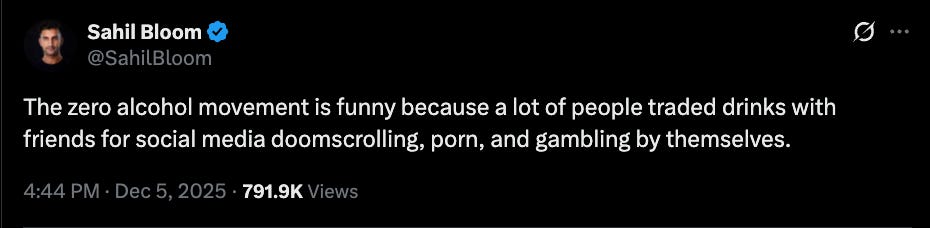
People can drink and smoke cigarettes together, at bars, parties, or dinners. Their replacements are increasingly solitary. Social gambling and marijuana usage have fallen, with today’s consumers more likely to place bets alone than at the casino and get high by themselves versus with friends. This is partly explained by other societal trends, but some of it likely comes down to increased potency, driven by profit-maximizing producers competing to make stronger products. Someone who gets a little high is more likely to enjoy being around others than someone extremely stoned, and someone betting on a team to win is more likely to watch a game with friends than someone who’s sweating every pitch.
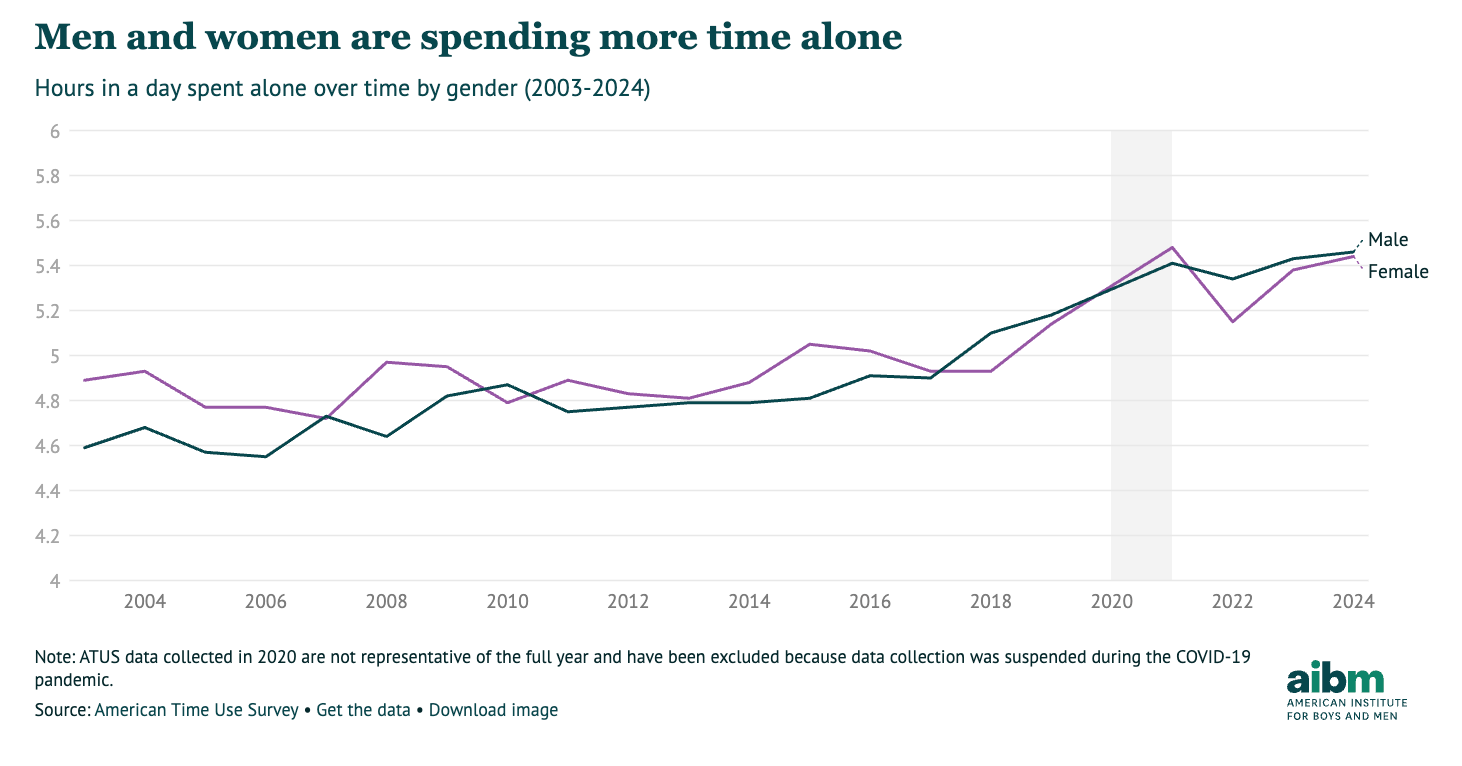
Americans, particularly young people, are already in the midst of a loneliness epidemic. As the U.S. Surgeon General warned in 2023, roughly half of Americans experience loneliness, and the health consequences of social disconnection are similar to smoking up to 15 cigarettes a day. Against that backdrop, the generational shift towards antisocial vices is cause for concern, even if on paper the vices may be less dangerous than what they replaced.
Regulate the Sellers, Not the Users
One thing we all agreed on was the importance of regulation, both because of the government’s ability to protect people and the relative simplicity of controlling corporate activity versus individuals. Technological innovation has given suppliers of vice the upper hand, and consumers need policymakers on their side to combat predation.3
The challenge is designing guardrails that people find appealing. In the 1960s, Americans could smoke a cigarette on an airplane but couldn’t gamble at every moment. Today those have completely reversed. What changed policy was secondhand smoke: once Americans understood that smoking didn’t just harm the smoker but the people around them, the political system had a non-moral reason to act. Americans are generally against legislating personal choices, but their calculus shifts once externalities become clear.
The question for gambling, marijuana, and pornography is whether the harms extend visibly beyond the individual user. In extreme cases they clearly do—compulsive gamblers and drug users devastate their families, workplaces, and communities. But most of the external harm from modern vices accumulates slowly and invisibly. It’s someone who loses a bit more money than they should, smokes a little more than they’d like, consumes porn in a way that subtly shapes how they think about sex and relationships. Damage is diffuse, probabilistic, and often easy to dismiss, making it a hard case to build coalitions around and to legislate.4
Impacts and Internalities
One of my favorite questions was from a student who asked whether it was even possible to agree on the negative externalities of these vices. Obviously if he were to smoke marijuana and go drive, that would be bad for society. But if he were to take an edible before going to bed, and it moderately impaired his ability to focus or study the next day, would that be so terrible?
This points to an asymmetry in policy debates about how to address vice. Identifying harms and externalities is easy. The harder calculation is on the other side of the ledger. How do we value the relaxation one derives from smoking a joint, or the additional enjoyment a bettor receives when they have money on a game? Should we remain neutral on the young man who stays home to watch porn instead of going to a party with his friends? Should we treat his revealed preference as valid, or decide that his personal utility function has been distorted by a product engineered to exploit his vulnerabilities?
These are not questions with empirical answers. And yet they are exactly the questions that legislators must grapple with when weighing policy responses.
Nearly 150 years ago, Mark Twain wrote that, “nothing so needs reforming as other people’s habits.” Charles, Shaleen, and I couldn’t agree on whose habits needed reforming, or to what extent that was the government’s job. But we did agree that the companies profiting from those habits deserve far more scrutiny and active regulation than they’re currently getting, and that the young people increasingly consuming them—alone, on their phones, in the midst of historic levels of social isolation—deserve better than what’s being sold to them.
Data on porn consumption is notoriously unreliable because survey respondents don’t answer survey questions truthfully.
E-cigarette use is up drastically, but comparing the long-run effects of vaping to cigarettes is above my paygrade.
As the only one with actual regulatory experience on the panel, Shaleen noted how during her time at Massachusetts’s Cannabis Control Commission they barred marijuana-tech platforms from manipulating search placement to favor particular operators, limited what consumer data retailers can collect and retain, and prohibited adult-use cannabis loyalty-program advertising.
One recurring theme of the panel was how policy in these areas has so often been shaped by those on the extremes, because the issue isn’t particularly salient for the majority of Americans in the middle.
Very thoughtful and thought provoking. I think the distinction between self-regarding vice-behavior and other-regarding is crucial, particularly for policy. Also the issue of how some vices, including gambling, are accelerating a loneliness epidemic is important to consider.
Thanks for the thoughtful piece.
Along with the reduced friction of delivery there is a viewpoint that younger generations are cynically rejecting the traditional pathway to a happy life and are instead opting for a "hedonism with an outside chance of making it big" approach?